
A premium residence can have an exceptional address, polished interiors, and a respected developer behind it, yet still underperform if its daily living proposition feels ordinary. The top amenities driving buyer demand are no longer decorative extras attached to a sales brochure. In Dubai and Istanbul, they increasingly influence leasing velocity, resale liquidity, tenant profile, and the degree to which an asset remains relevant as new supply enters the market.
For internationally mobile buyers, amenities also reduce friction. They create security, convenience, wellness, and a sense of private hospitality within the building itself. The investment question is not whether a project has more features than its competitors. It is whether those features are credible, well-operated, suited to the location, and likely to matter to the buyer or tenant who will occupy the property three to five years from now.
Why Amenities Have Become an Investment Variable
Premium real estate is being evaluated through a more sophisticated lens. Buyers are comparing not only views, layouts, and price per square foot, but also how a development supports the rhythm of modern life. A building that shortens the commute to wellness, work, social time, and family needs can command a stronger emotional response at viewing and a more resilient position at resale.
This matters especially in markets with ambitious development pipelines. Dubai continues to set a global benchmark for branded residences, resort-style towers, and service-led communities. Istanbul offers a different but equally compelling proposition: central districts, Bosphorus-facing living, established urban fabric, and projects that combine privacy with city access. In both markets, amenities can distinguish two properties with otherwise similar specifications.
Still, an amenity does not create value by existing. A dramatic lobby may improve first impressions, but it will not necessarily support a rental premium. Conversely, a well-managed fitness center, reliable concierge team, private parking, and thoughtful family facilities may influence decision-making every day. The strongest developments align amenity investment with the needs of their likely residents.
The Top Amenities Driving Buyer Demand in Premium Markets
Wellness That Is Designed for Daily Use
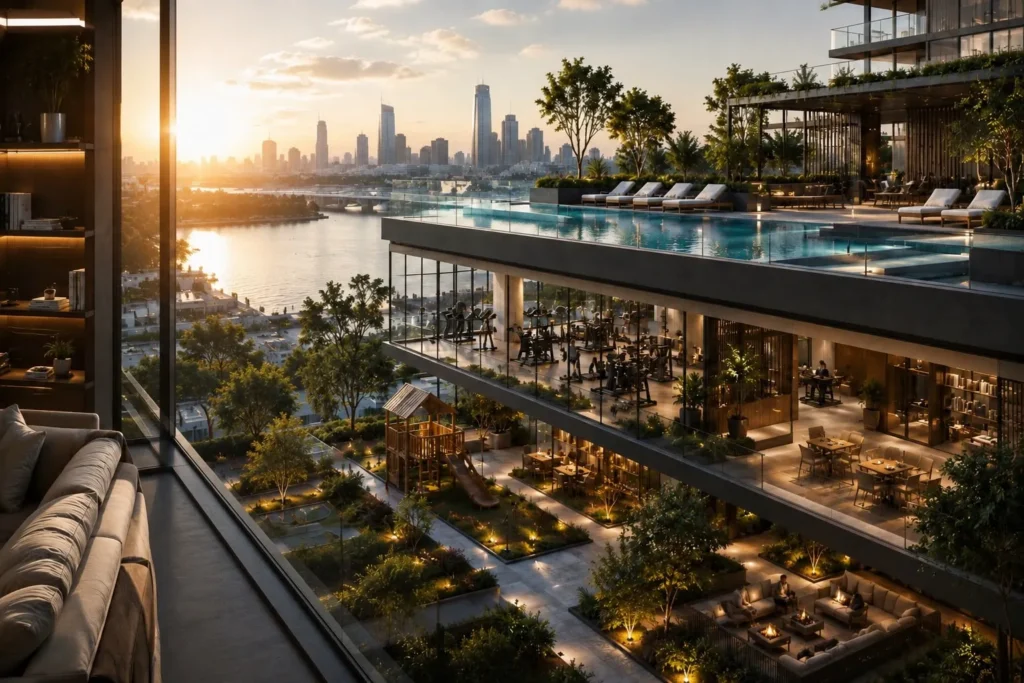
Wellness has moved from a desirable feature to a core expectation in upper-tier residential projects. Buyers respond to high-quality fitness centers, separate training studios, spa areas, sauna and steam facilities, indoor or temperature-controlled pools, and landscaped outdoor spaces that encourage regular use.
The distinction is quality and usability. A small gym with limited equipment rarely changes a purchasing decision. A professionally designed wellness floor with natural light, credible equipment, dedicated recovery spaces, and extended operating hours can. For expatriate professionals and high-net-worth families, this replaces time-consuming off-site routines and reinforces the sense that the residence supports a complete lifestyle.
In Dubai, outdoor pools, cabanas, jogging paths, and climate-conscious leisure areas carry particular weight. In Istanbul, where urban density and seasonal weather shape habits differently, indoor pools, spa facilities, and carefully maintained green areas may have greater practical appeal. Investors should assess how often residents will realistically use an amenity, not simply how impressive it appears in renderings.
Hospitality-Level Service and Security
Privacy, responsiveness, and confidence are central to luxury buyer demand. A staffed reception, 24-hour security, valet or porter service, parcel management, and a capable concierge can materially improve a resident’s experience, particularly for buyers who travel frequently or use the property as a second home.
Service is also one of the clearest markers separating a premium development from a conventional apartment building. A well-run concierge can coordinate arrivals, maintenance access, reservations, deliveries, and local requests. For overseas owners, reliable building operations provide a layer of reassurance when they are not physically present.
However, service-led amenities require scrutiny. They bring operating costs, and poor management can damage the value proposition quickly. Investors should ask who will manage the building, how service charges are structured, whether staffing levels are sustainable, and how the developer has performed on previous projects. The amenity is only as valuable as its execution after handover.
Flexible Workspaces and Private Meeting Areas
The modern buyer is less willing to choose between a residence and a productive work environment. Business lounges, co-working suites, private meeting rooms, quiet libraries, and high-speed connectivity now carry real appeal, particularly among entrepreneurs, executives, and globally connected investors.
These spaces are most effective when they feel private and purposeful rather than resembling a token desk beside the lobby. A meeting room that can host a client call, a resident lounge with appropriate acoustic design, and a comfortable work area can make a property more attractive to corporate tenants and owner-occupiers alike.
This category is particularly relevant in Dubai, where many residents operate international businesses or maintain flexible work schedules. In Istanbul, it can be equally valuable in centrally located developments serving professionals who want to remain close to commercial districts without compromising on residential comfort.
Family Infrastructure That Protects Long-Term Demand
For family buyers, the strongest amenities are often practical rather than theatrical. Children’s pools, age-appropriate play areas, shaded outdoor spaces, secure pedestrian routes, multipurpose rooms, and access to quality education or retail can influence a purchase more than a dramatic rooftop feature.
Family-oriented infrastructure broadens the buyer pool, which matters at resale. A project designed only for short-stay tenants may be exposed when market preferences shift. A development that also works for long-term residents, especially in established neighborhoods, can create more stable demand across market cycles.
The trade-off is location. In a dense central district, a compact but intelligently designed children’s area may be more realistic than extensive grounds. In a master-planned community, buyers may expect parks, sports courts, clubhouses, and safe internal mobility. The relevant standard is not universal. It is defined by the neighborhood, price point, and target resident.
Outdoor Space, Water, and a Sense of Arrival
Private terraces, landscaped podiums, roof gardens, waterfront promenades, and well-designed pool decks continue to attract buyers because they create scarcity. In large urban centers, meaningful outdoor space is difficult to replicate and immediately understood at viewing.
In Dubai, proximity to the beach, marina, canal, or a carefully designed waterfront experience can be a powerful demand driver. In Istanbul, Bosphorus views, terraces, mature landscaping, and a protected sense of privacy can command exceptional attention. These attributes are not merely aesthetic. They influence how a property photographs, how it is marketed internationally, and how memorable it feels compared with competing stock.
Yet view premiums and outdoor amenities must be priced with discipline. A buyer should distinguish between a permanent view corridor and one that may be obstructed by future construction. They should also evaluate maintenance responsibility, wind exposure, privacy, and whether outdoor areas remain usable for much of the year.
Mobility, Parking, and Practical Convenience
Luxury buyers expect convenience to be resolved before it becomes a problem. Secure parking, visitor parking, electric vehicle charging, direct elevator access, efficient drop-off zones, and proximity to major roads or transit routes can affect both end-user satisfaction and tenant retention.
This is less glamorous than a spa or lounge, but it is often more commercially important. In Dubai, sufficient covered parking and intelligent vehicle access are significant for many households. In Istanbul, where traffic and parking constraints can shape daily life, access, drop-off planning, and location relative to business centers become critical decision factors.
For an investor, practical amenities often protect downside. They make the property easier to lease to a wider group of qualified tenants and reduce the chance that a resident rejects an otherwise attractive home for operational reasons.
How Investors Should Evaluate Amenity Claims
A refined amenity package should be verified with the same discipline applied to pricing, title structure, and developer reputation. Marketing language can overstate what will ultimately be delivered, while extensive shared facilities can introduce high recurring costs that weaken net yield.
Before committing, evaluate the amenity plan against five questions:
- Does it serve the likely resident profile for this location and unit type?
- Is the space substantial enough to function well at anticipated occupancy?
- Has the developer delivered and maintained comparable facilities before?
- Are service charges proportionate to the value received?
- Will the amenity remain differentiated when nearby projects are completed?
The final question is often overlooked. A private cinema or golf simulator may be distinctive at launch but common within a few years. By contrast, a rare waterfront setting, trusted service operation, generous green space, or direct connection to an established lifestyle destination can be more difficult for future supply to copy.
Prioritize Relevance Over Excess
The most investable projects do not necessarily offer the longest amenity list. They offer an environment that makes sense for the resident, the address, and the ownership objective. A compact city residence may benefit most from concierge service, wellness, parking, and workspaces. A family-focused community may derive greater value from green space, children’s facilities, retail access, and security. A branded waterfront residence may justify a deeper hospitality model, provided operating standards support its promise.
For buyers assessing Dubai or Istanbul from abroad, this is where selective advisory has value. The right question is not, “What does this project include?” It is, “Which features will preserve desirability when I choose to lease, hold, or sell?”
A property should leave its owner with more than an impressive arrival experience. It should provide a clear reason for the next qualified buyer or tenant to choose it over everything else available.