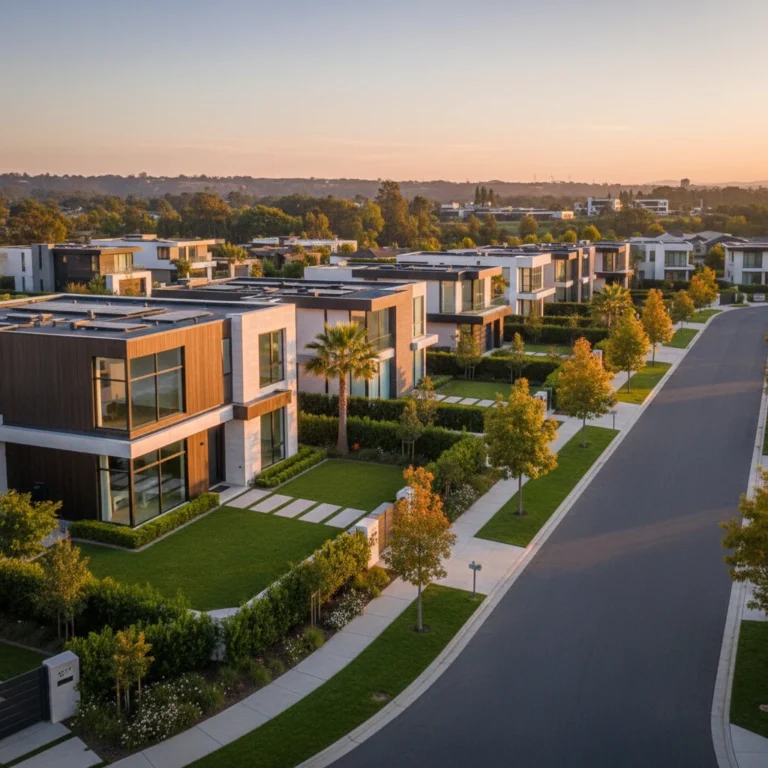


A serious luxury branded residences review begins where the brochure ends: with the price premium, the operating agreement, and the buyer profile likely to support resale demand years from now. A celebrated name on the façade can elevate a residence into a globally recognized asset. It can also conceal an expensive proposition if the location, developer, and economics do not justify the brand.
For internationally mobile investors considering Dubai or Istanbul, branded residences deserve analysis as a distinct asset class. They sit at the intersection of prime real estate, hospitality standards, and reputation-driven demand. The strongest projects can preserve value unusually well through market cycles. The weakest rely on a logo to compensate for ordinary fundamentals.
What a Luxury Branded Residence Actually Delivers
A branded residence is not simply an upscale apartment with a designer lobby. It is a residential property associated with a hospitality, fashion, automotive, wellness, or design brand, usually governed by detailed standards for architecture, interiors, amenities, and service. In the best cases, the brand is embedded in the ownership experience through trained staff, concierge services, private facilities, and a consistent level of maintenance.
That distinction matters because affluent buyers do not only acquire square footage. They acquire time savings, privacy, familiarity, and confidence that an asset will be presented to a global market in a recognizable way. For a family dividing time between the UAE, Turkey, Europe, and the United States, that proposition can be highly practical.
Still, the brand itself does not guarantee investment performance. A luxury hotel operator with a deep service culture may create meaningful operational value. A licensing arrangement centered mainly on design approval may have far less influence after handover. Investors should establish exactly what the brand controls, what it merely endorses, and how long that relationship is contractually secured.
Luxury Branded Residences Review: The Investment Case
The investment case typically rests on three factors: differentiation, buyer liquidity, and income positioning. In competitive luxury markets, a credible brand can make a project easier to identify and market to overseas purchasers. That visibility may widen the future buyer pool, particularly where purchasers value familiar standards more than local market knowledge.
Dubai has developed a mature branded-residence ecosystem because its luxury market is international by design. Buyers often understand the relationship between a recognized operator, waterfront or central location, and premium service. In the right submarket, branded homes can command a price advantage over comparable non-branded stock and attract stronger demand from lifestyle purchasers.
Istanbul presents a different, more selective opportunity. The city offers exceptional depth of culture, commerce, and waterfront living, but branded projects must be assessed against local demand patterns rather than Dubai’s pricing logic. A well-positioned residence in an established district, backed by a proven developer and supported by meaningful service, may appeal to both domestic wealth and international buyers. A branded project in a secondary location may not receive the same support simply because it carries an international name.
Rental performance also depends on the operating model. Some residences are designed for long-term tenants who value privacy and hotel-style support. Others are structured around managed short-stay programs. The latter can produce attractive gross revenue in favorable conditions, but investors must examine management fees, owner-use restrictions, furnishing requirements, local licensing, and the gap between projected and net income. Gross yield is a marketing figure. Net yield is an investment decision.
Where the Premium Is Earned – and Where It Is Not
A premium is justified when it improves the asset’s enduring desirability. This usually means a scarce location, a respected developer, limited supply, architectural distinction, well-designed layouts, and service that remains credible after the launch campaign has passed. The brand should reinforce these fundamentals, not substitute for them.
The most common error is comparing a branded unit only with another branded unit. Instead, compare it with high-quality, non-branded residences in the same micro-market. Measure the difference in price per square foot, service charges, parking, views, delivery quality, and realistic rental income. Then ask whether the premium is likely to remain visible to the next buyer.
A high premium may still be reasonable for a buyer who prioritizes personal use, security, and an elevated arrival experience. It may be less suitable for an investor seeking the highest possible yield. Neither objective is wrong, but they lead to different acquisition criteria.
Service charges deserve particular attention. Branded residences often maintain extensive amenity programs, including valet, concierge, spa facilities, pools, lounges, and private dining spaces. These elements can support value, yet they also create recurring costs. Investors should request a clear schedule of anticipated charges, understand what is included, and review how budgets are approved and controlled after occupancy.
The Questions That Protect Capital
Before reserving a unit, a disciplined buyer should examine the project beyond its visual identity. The developer’s delivery record matters as much as the brand. Review completed projects, construction quality, timing, defect resolution practices, and the developer’s capacity to sustain the promised standard.
The legal structure should be equally clear. Confirm title type, registration process, payment protections, handover conditions, and the rights attached to the residence. In Dubai, buyers should understand the relevant registration and escrow arrangements. In Istanbul, overseas purchasers should obtain precise guidance on title, valuation, tax exposure, and transaction documentation through qualified local professionals.
Brand continuity is another material issue. Ask how long the agreement runs, whether renewal is automatic, and what occurs if the operator withdraws or standards are not met. A residence may retain its physical quality after a brand departs, but the market can reassess its value quickly if the identity that supported the premium disappears.
For buyers considering Turkish citizenship by investment, qualifying property can be part of a broader wealth and mobility strategy. Eligibility thresholds, valuation requirements, holding periods, and administrative procedures should be verified at the time of purchase. Citizenship objectives should never override asset quality. The right property must stand on its investment merits even without the program attached.
A More Precise Way to Compare Opportunities
Rather than asking whether branded residences are “worth it,” assign the project a clear role within the portfolio. Is it a primary lifestyle base, a capital-preservation holding, an income-oriented asset, or a future resale play? A single property rarely leads in every category.
For lifestyle-led acquisitions, prioritize the daily ownership experience: access, privacy, building management, services, and the credibility of the brand in the buyer’s own circles. For capital preservation, focus on scarcity, location resilience, low future supply, and a developer capable of protecting the finished product. For income, underwrite conservatively and use net figures after all operating costs.
Timing also changes the answer. Off-plan entry can offer favorable payment structures and early pricing, but introduces delivery and market-cycle risk. Ready residences provide a clearer view of construction quality, actual service levels, and tenant demand, though the entry price may be higher. The correct choice depends on liquidity, holding period, and tolerance for execution risk.
RAD Global approaches this category as a selective investment decision, not a prestige purchase. That means testing a project against comparable supply, developer performance, transaction structure, and the client’s long-term exit strategy before treating its brand as a source of value.
The Verdict for Discerning Buyers
Luxury branded residences can be exceptional assets when the brand, building, and location are aligned. They can offer a more durable luxury proposition than conventional apartments, especially in markets with international buyer demand and limited prime inventory. Yet the strongest purchases are rarely the loudest launches. They are the residences where the premium is supported by genuine scarcity, disciplined operations, and a buyer audience that will still care five or ten years from now.
Treat the brand as one layer of due diligence, not the conclusion. When the underlying real estate is compelling without the logo, the brand has the potential to add distinction. When the fundamentals are weak, no name can reliably protect capital.