

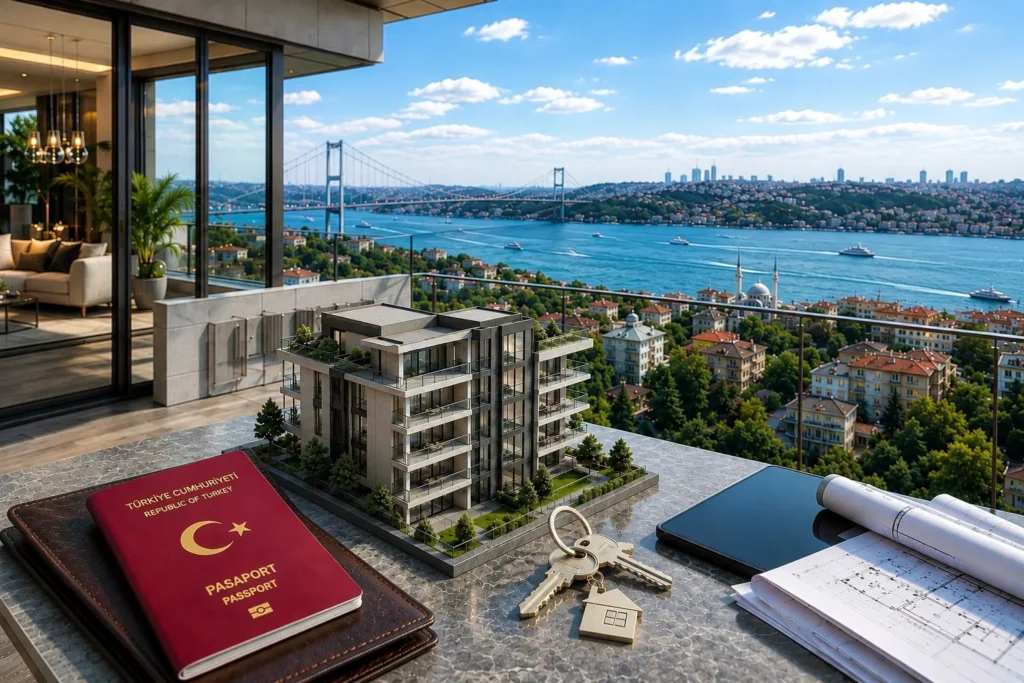
A premium apartment with Bosphorus views can look compelling on a viewing tour. A citizenship-eligible unit in a fast-selling development can look even more so. But for serious buyers, the real question is not what looks attractive – it is how to buy property in Turkey as a foreigner with control, legal clarity, and a sound investment thesis.
Turkey remains one of the most strategically interesting property markets for international buyers. Istanbul, in particular, offers depth, liquidity, and long-term urban demand that few regional markets can match. Yet the buying process is not one-size-fits-all. A lifestyle buyer, a yield-focused investor, and a citizenship applicant may all purchase in Turkey, but they should not buy the same type of asset, on the same terms, or with the same exit expectations.
How to buy property in Turkey as a foreigner starts with strategy
The strongest acquisitions begin before a single property is viewed. Foreign buyers often enter the market asking about districts, passport requirements, or payment plans. Those matter, but the first step is defining the purpose of the purchase.
If your objective is capital appreciation, location quality, infrastructure growth, and developer discipline deserve greater weight than short-term promotional pricing. If your objective is rental income, tenant profile, building management, and realistic occupancy assumptions matter more than a glossy brochure. If your objective is Turkish citizenship, compliance becomes central, and a poorly structured purchase can create delays or disqualify the application.
This is where many overseas buyers lose precision. They confuse activity with strategy. Seeing more projects does not improve the decision if the underlying brief is still unclear.
Who can buy property in Turkey
Most foreign nationals can legally purchase real estate in Turkey, subject to nationality-based rules and standard compliance procedures. The legal framework is generally open to overseas buyers, but eligibility can vary depending on the buyer’s country of citizenship and the location or classification of the asset.
There are also practical limitations. Certain military zones and restricted areas are off-limits, and some land purchases involve additional scrutiny. For most international buyers focused on residential apartments, branded residences, villas, or commercial units in approved urban areas, the process is straightforward when properly managed.
The important point is this: legal eligibility to buy is only the starting line. A buyer can be allowed to purchase and still acquire the wrong asset, at the wrong valuation, under the wrong structure.
Choose the right asset, not just the right city
Istanbul captures the largest share of international investor attention for good reason. It is Turkey’s commercial engine, its deepest residential market, and the city with the broadest range of premium developments. That does not mean every district performs equally.
Prime central neighborhoods, regeneration corridors, and infrastructure-led submarkets each serve different goals. A family seeking long-term use may prioritize established districts, school access, and daily convenience. An investor may look harder at transportation expansion, inventory pipeline, and resale depth. A citizenship buyer may need a qualifying asset that satisfies both regulatory thresholds and future marketability.
The same discipline applies outside Istanbul. Coastal markets may suit lifestyle ownership, but some have thinner year-round rental demand and more seasonal resale dynamics. Lower entry pricing can be attractive, yet lower entry pricing alone is not a strategy.
The legal process behind how to buy property in Turkey as a foreigner
Once the target asset is identified, the transaction process typically moves through reservation, due diligence, contract stage, payment execution, and title deed transfer. The sequence can vary slightly depending on whether the property is resale, off-plan, or newly delivered stock.
A tax number is usually obtained early in the process, and the buyer will generally need a Turkish bank account to support payments and formal completion requirements. Identity documentation, translated passports, and power of attorney arrangements may also be needed, especially if the buyer is transacting remotely.
The title deed, known as the TAPU, is the critical legal instrument. Before transfer, proper checks should confirm that the seller has clean authority to sell, that there are no undisclosed encumbrances affecting the asset, and that the property matches what has been represented commercially. On new developments, buyers should also verify the developer’s standing, delivery history, zoning compliance, and the legal basis of the unit being sold.
This is not an area for assumptions. A polished sales office is not due diligence.
Due diligence is where value is protected
Sophisticated investors understand that the purchase price is only one part of the risk equation. The more meaningful question is whether the asset holds up under scrutiny.
Due diligence should cover title status, permits, building approvals, debt or lien exposure, occupancy readiness, and whether the contract terms are aligned with the buyer’s interests. For off-plan property, construction timeline risk and developer execution risk deserve special attention. For resale property, valuation discipline matters because emotional pricing is not uncommon in certain segments.
Foreign buyers should also be realistic about projected returns. Some projects are marketed with ambitious rental assumptions or near-guaranteed appreciation narratives. Those claims should be tested against district-level supply, tenant demand, unit mix, and competing inventory. Strong real estate investing is built on verified fundamentals, not brochure mathematics.
Costs, taxes, and financing considerations
Buyers should budget beyond the quoted purchase price. Title deed transfer tax, valuation-related costs, legal support, translation, notary procedures, and ongoing building charges all affect the true cost basis. Depending on the property and the buyer’s use case, there may also be future tax implications on rental income or resale gains.
Financing is available in some circumstances, but many foreign investors purchase with cash or structured installment plans from developers. Developer financing can be attractive, especially in branded or new-build projects, yet installment convenience should not distract from the quality of the underlying asset. A weak property on flexible terms is still a weak property.
Currency planning is another serious consideration. Since many buyers hold wealth in US dollars or other foreign currencies, exchange-rate timing and fund-transfer compliance should be handled carefully. This is especially relevant for buyers seeking citizenship, where source of funds and valuation compliance can carry added importance.
Buying for Turkish citizenship
For some international buyers, the route to Turkish citizenship is a major part of the investment case. In those transactions, compliance is not a side issue – it is the framework that governs the deal.
The property must meet the applicable investment threshold and regulatory conditions in force at the time of purchase. The valuation process, title restrictions, holding period, and payment documentation all need to align correctly. A property marketed as citizenship-eligible should never be accepted at face value without verification.
This is where disciplined advisory adds real value. The objective is not simply to secure eligibility, but to do so through an asset that still makes sense on location, quality, resale positioning, and long-term wealth preservation. Meeting the citizenship requirement is one milestone. Protecting capital beyond that milestone is the more enduring one.
Common mistakes foreign buyers make
The biggest mistakes are rarely dramatic. They are usually quiet misjudgments made early.
Some buyers overpay for convenience because they purchase the first project presented through a hospitality-led sales funnel. Others focus too heavily on discount language and not enough on exit liquidity. Some select based on citizenship compliance alone, then discover the asset has limited rental appeal or weak resale depth. Others underestimate the difference between a reputable developer and a heavily marketed one.
There is also a broader error that sophisticated buyers avoid: treating all advisory sources as equal. In cross-border real estate, access is common. Judgment is not.
What a disciplined purchase process should look like
A well-run acquisition process is selective, documented, and paced correctly. It starts with a clear investment brief, narrows the market to vetted opportunities, tests the asset commercially and legally, and only then moves to execution. That level of control is especially valuable in Turkey, where the market offers real opportunity but also meaningful variation in quality.
For buyers entering from the US or other international markets, the advantage comes from acting with local intelligence and institutional discipline. That is how opportunities are separated from noise. Firms such as RAD Global position around that principle for a reason – serious capital needs more than introductions. It needs structure.
Turkey can be a highly rewarding real estate market for foreign buyers, but the best outcomes rarely come from speed alone. They come from buying with a clear thesis, verifying every critical detail, and choosing assets that can justify their place in a long-term portfolio long after the transaction is complete.