
Table of Contents
- 1. Introduction to Property Evaluation for Turkish Citizenship
- 2. Key Legal Requirements for Turkish Citizenship by Real Estate Investment
- 3. Practical Evaluation Framework: Location and Neighborhood Dynamics
- 4. Due Diligence: Verifying Tapu, Iskan, and Property Encumbrances
- 5. Financial Analysis: Assessing True Rental Yields and Capital Appreciation
- 6. Cash vs. Financing: Structuring Your Property Purchase
- 7. Valuation Reports and Developer Credibility Assessment
- 8. Long-Term Capital Preservation and Exit Strategy Formulation
- 9. Frequently Asked Questions (FAQ)

1. Introduction to Property Evaluation for Turkish Citizenship
Navigating international real estate acquisitions requires a balanced perspective that merges legal compliance with rigorous investment evaluation. For investors globally, pursuing Turkish citizenship by real estate investment has established itself as one of the most efficient pathways to acquiring a powerful secondary citizenship alongside a lucrative asset. However, the true success of this venture lies far beyond simply meeting the government’s minimum monetary threshold; it hinges on choosing an asset that preserves value, generates robust returns, and delivers long-term financial security.
In 2026, the Turkish property market continues to offer dynamic opportunities across major urban centers like Istanbul, Ankara, and coastal hubs such as Antalya and Bodrum. Yet, navigating this landscape without a strategic evaluation checklist can lead to common pitfalls—such as purchasing overpriced units, encountering delayed construction projects, or buying properties with legal encumbrances that complicate the citizenship application process. By evaluating opportunities under the Turkish citizenship by real estate investment framework with a structured due diligence strategy, foreign investors can protect their capital while acquiring high-yielding assets.

2. Key Legal Requirements for Turkish Citizenship by Real Estate Investment
Before analyzing physical structures and financial returns, investors must thoroughly understand the regulatory foundation governing foreign property purchases in Turkey. The official framework for Turkish citizenship by real estate investment stipulates that foreign nationals must purchase real estate valued at a minimum threshold—currently set at $400,000 USD (or equivalent foreign currency)—and commit to holding the property for at least three consecutive years.
To qualify, the property transaction must meet several stringent legal criteria enforced by official government bodies. First, payment must be transferred via direct bank transaction from the buyer’s account to the seller’s account in convertible foreign currency. Second, buyers must obtain a Foreign Exchange Purchase Certificate (Döviz Alım Belgesi or DAB) from a central-bank-authorized Turkish institution, confirming that the foreign currency was converted to Turkish Lira for the purchase. The transaction is overseen by the General Directorate of Land Registry and Cadastre, which places an official annotation (Şerh) on the title deed stating that the property cannot be sold or transferred for three years under the citizenship law.
Furthermore, an official valuation report prepared by a licensed independent real estate appraisal firm accredited by the Capital Markets Board of Turkey (SPK) must verify that the property market value meets or exceeds the required threshold. Ensuring that the expert appraisal matches or exceeds the contract price is a crucial milestone when applying for Turkish citizenship by real estate investment.
3. Practical Evaluation Framework: Location and Neighborhood Dynamics
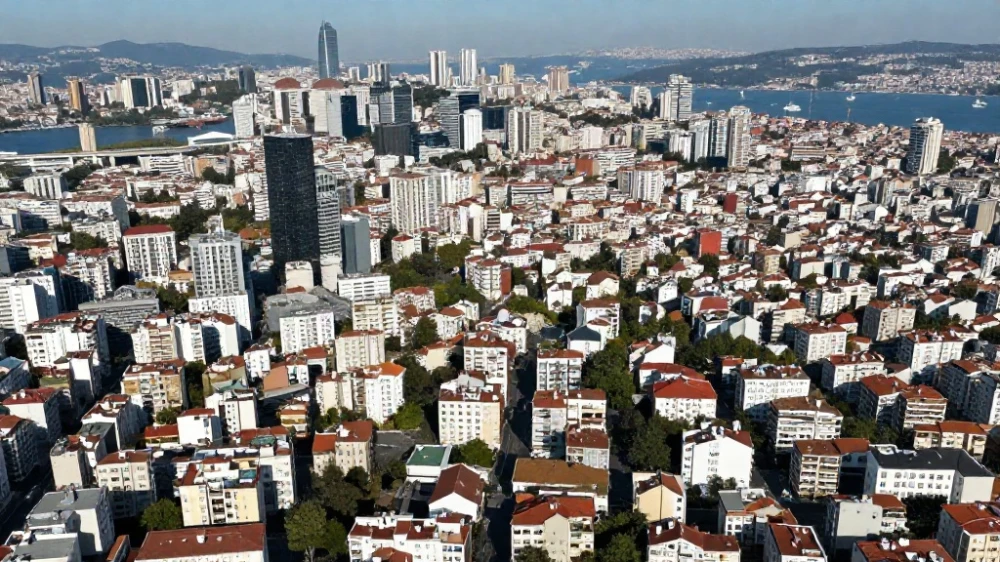
Location remains the single most impactful factor determining property performance and future resale liquidity. When selecting real estate for Turkish citizenship by real estate investment, investors should differentiate between speculative lifestyle developments and established economic hubs that consistently drive rental demand and asset appreciation.
In Istanbul, for instance, location dynamics vary significantly depending on investment goals:
- Central Business Districts (CBD): Districts like Maslak, Levent, and Şişli offer high rental yields driven by corporate executives, expatriates, and urban professionals. Properties here command premium square-meter prices but benefit from minimal vacancy rates and exceptional liquidity.
- Historical & Cultural Enclaves: Neighborhoods along the Bosphorus, such as Kadıköy, Üsküdar, and Nişantaşı, represent prestige real estate. Supply is strictly limited, ensuring resilient capital preservation regardless of macroeconomic fluctuations.
- Urban Transformation Zones: Emerging corridors along the Basın Ekspres arterial route or parts of Kağıthane feature modern residential compounds with extensive social amenities. These areas appeal to middle-income tenant demographics and promise capital growth as infrastructure expands.
To evaluate location effectively, investors should assess micro-factors including proximity to metro stations, major highways (E-5 and TEM), international schools, healthcare complexes, and university campuses. Properties situated within 500 meters of a major transport node historically achieve higher appreciation rates and lower vacancy periods.
4. Due Diligence: Verifying Tapu, Iskan, and Property Encumbrances
Physical aesthetics can often overshadow critical legal aspects. A essential safety check when securing Turkish citizenship by real estate investment is verifying the absolute legal cleanliness of the Title Deed (Tapu) and construction permissions.
Investors must familiarize themselves with two primary types of title deed statuses in Turkey:
| Title Deed Status | Description | Investment Suitability |
|---|---|---|
| Kat İrtifakı (Construction Servitude) | Issued during early or mid-stage construction. Allocates specific ownership shares of the land corresponding to intended independent units. | Suitable for off-plan or under-construction projects, provided the developer holds valid building permits and guarantees project completion. |
| Kat Mülkiyeti (Full Ownership) | Issued after construction is fully finished and certified by municipal authorities. Confirms that the specific apartment unit complies with all architectural norms. | Ideal and safest option. Confirms the property possesses an official Occupancy Permit (İskan). |
Purchasing a property without an Occupancy Permit (İskan) poses substantial risks. Lack of İskan means municipal authorities have not verified that the building adheres to earthquake safety, fire safety, and urban planning regulations. Additionally, utility connections (electricity, water, gas) for non-İskan properties operate under expensive temporary commercial tariffs. Verifying title deed accuracy ensures your Turkish citizenship by real estate investment process proceeds smoothly without unexpected regulatory delays.
Always instruct an independent legal representative to perform a land registry search to ensure the property is free from existing mortgages (Ipotek), court liens, or unpaid municipal tax debts prior to releasing purchase funds.

5. Financial Analysis: Assessing True Rental Yields and Capital Appreciation
A mathematically sound approach to real estate requires looking beyond marketing brochures and evaluating net financial performance. When evaluating rental yields in a Turkish citizenship by real estate investment portfolio, distinguish carefully between gross yields and net operational yields.
Gross yield calculations simply divide annual rental income by the total purchase price. However, true investment performance depends on net yield, which accounts for ongoing holding costs, including:
- Property Management Fees: Professional management fees typically range between 8% and 12% of collected rent for residential units.
- Maintenance and HOA Fees (Aidat): In modern residential complexes (Site), monthly maintenance fees cover 24/7 security, swimming pools, fitness centers, and landscaped grounds. Verify whether tenant leases explicitly assign full Aidat payment responsibility to the tenant.
- Property Taxes (Emlak Vergisi): Annual municipal real estate tax in Turkey is relatively modest—generally ranging from 0.1% to 0.2% of the registered property value for residential units in major cities.
- Rental Income Tax: Progressive income tax applies to net rental revenues, though deductions for actual expenses or standardized allowance percentages are permitted under Turkish tax codes.
To analyze potential capital appreciation, study multi-year historical price indices, local supply pipelines, and demographic migration trends. Overbuilding in peripheral suburban areas can suppress capital growth, whereas supply-constrained core urban zones consistently deliver sustained long-term capital preservation.
6. Cash vs. Financing: Structuring Your Property Purchase
How an investor structures capital deployment directly impacts overall returns and operational flexibility. Investors frequently compare outright capital purchase strategies against leveraged financing structures to optimize liquidity.
For non-resident investors, cash purchases offer significant advantages in transaction speed, negotiating leverage, and reduced administrative friction. Sellers often grant substantial discounts for immediate liquidity. Furthermore, cash transactions streamline legal filings required by the immigration authority because bank transfer receipts (Dekont) clearly reflect the full unencumbered dollar value required for citizenship eligibility.
Conversely, utilizing leverage or developer payment plans requires strategic diligence. While developer installment plans (e.g., 30% down payment with 24 to 36 monthly interest-free payments) are attractive, citizenship regulations require that the total amount paid at the time of application must reach or exceed the official threshold value. When weighing liquidity options, evaluating cash purchase versus mortgage investment decisions helps identify the optimal financial structure tailored to individual wealth management strategies.
When balancing upfront capital in Turkish citizenship by real estate investment decisions, ensure that exchange rate dynamics between foreign currencies and the Turkish Lira are calculated accurately using official central bank exchange reference rates on the exact day of payment.
7. Valuation Reports and Developer Credibility Assessment
The mandatory independent valuation report (Ekspertiz Raporu) serves as a vital safeguard protecting both the state and the investor. This official real estate appraisal report mandatory for Turkish citizenship by real estate investment evaluates physical property conditions, comparable neighborhood sales, legal compliance, and structural integrity.
Discrepancies sometimes arise between developer asking prices and official valuation appraisals. For example, if a developer sells a property for $420,000 USD but the independent government-assigned valuer assesses the property at $380,000 USD, the transaction will fail to meet the citizenship criteria. To prevent this risk, investors should insist on obtaining a pre-appraisal assessment before transferring deposit funds or executing binding legal contracts.
Working with top-tier developers on Turkish citizenship by real estate investment assets also mandates assessing developer track records:
- Financial Solvency: Verify whether the developer relies excessively on off-plan pre-sales to finance core construction phases. Developers backed by major government partnerships (such as EMLAK KONUT or TOKİ partnerships) present minimal completion risk.
- Historical Delivery Quality: Inspect completed residential projects previously delivered by the developer. Evaluate material durability, landscaping upkeep, and post-handover facility management quality.
- Contract Transparency: Ensure the Sales Agreement includes clear construction delivery deadlines, material specifications, penalties for delay, and explicit provisions governing citizenship support services.
8. Long-Term Capital Preservation and Exit Strategy Formulation
Successful real estate investors plan their departure strategy on the day of acquisition. When planning an exit strategy after the compulsory 3-year holding period for Turkish citizenship by real estate investment, investors must evaluate who their ultimate resale buyer will be.
Properties purchased exclusively within developments target-marketed to foreign buyers sometimes face liquidity bottlenecks at resale if domestic buyers find the prices unaligned with local market purchasing power. Conversely, properties situated in mature, high-demand residential districts appeal equally to both foreign investors and high-net-worth domestic Turkish buyers, ensuring a deep pool of liquidity when you decide to divest.
Key parameters for a robust exit strategy include:
- Target Buyer Demographic: Prioritize assets that fulfill core domestic living demand—such as family-oriented 2+1 or 3+1 apartments near business hubs, quality schools, and transport infrastructure.
- Tax Efficiency: Real estate held by natural persons in Turkey for more than five years is completely exempt from personal Capital Gains Tax (CGT) upon sale. Structuring your timeline around this 5-year benchmark significantly enhances net real returns.
- Currency Hedging: While real estate in Turkey is purchased in Turkish Lira equivalent, prime international real estate in key Istanbul districts historically tracks inflation and hard currency benchmarks over multi-year holding periods.
Reviewing a comprehensive guide to investment property exits empowers real estate investors to structure holdings efficiently, optimizing capital gains while preserving wealth across international jurisdictions.
By prioritizing property quality, location fundamentals, and structural legality over superficial incentives, high-net-worth individuals can successfully execute a high-yield strategy while securing multi-generational benefits.
RAD GLOBAL Building Trust. Shaping Vision. Creating Legacy.
9. Frequently Asked Questions (FAQ)
Can I purchase multiple properties to meet the minimum threshold for Turkish citizenship?
Yes. Investors are permitted to purchase multiple real estate assets (e.g., two residential apartments or a commercial unit combined with a residential unit) provided the cumulative appraised market value and official foreign currency conversion total reaches or exceeds the required threshold. All properties must be submitted under a unified citizenship application and are subject to the same three-year resale restriction.
What happens to my Turkish citizenship if I sell the real estate after three years?
Once the three-year mandatory holding period expires, you are legally entitled to sell, lease, or hold your real estate assets. Your Turkish citizenship remains fully permanent and valid for life, along with citizenship rights extended to your family, regardless of whether you retain or sell the qualifying property.
Are commercial properties eligible for the citizenship by real estate program?
Yes. The legal framework applies to all real estate property categories that possess clear title deeds. Commercial properties—such as retail spaces, corporate office units, or logistics assets—are fully eligible under the program, provided they meet valuation standards and carry clear title status.