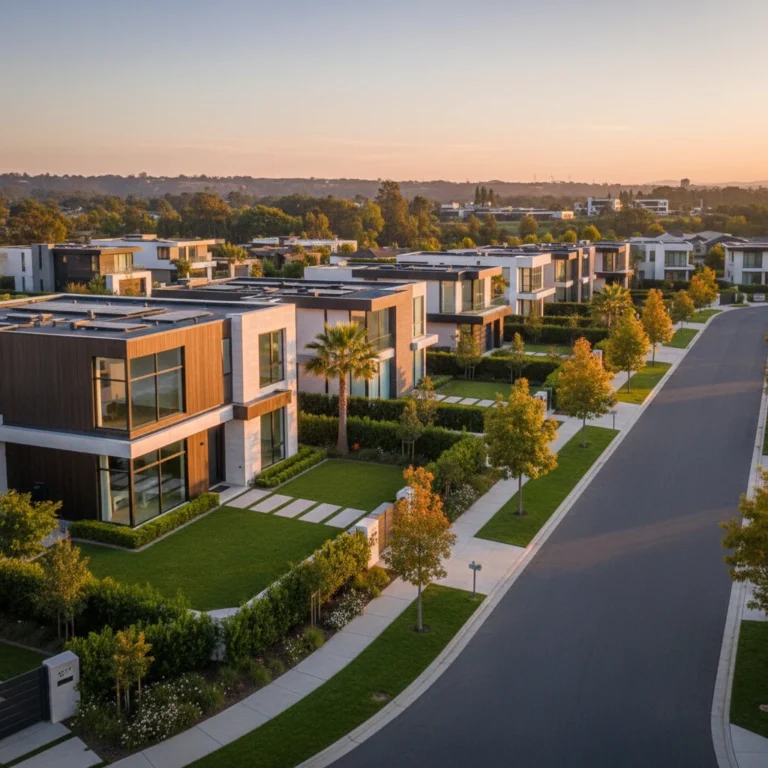


A portfolio can appear diversified on paper while remaining exposed to the same underlying forces. Public equities, corporate bonds, and funds may move differently on a given day, yet all can be sensitive to interest-rate shifts, currency pressure, or broad market sentiment. Portfolio diversification through real estate introduces a different category of asset: one tied to land, location, usable space, and long-term demand.
For globally minded investors, the objective is not simply to own another property. It is to select an asset that earns its place beside liquid holdings, private businesses, and other wealth-preservation vehicles. The right real estate allocation can provide income potential, tangible collateral value, geographic diversification, and an additional path to capital appreciation. The wrong one can create concentration, illiquidity, and unnecessary operational complexity.
Why Portfolio Diversification Through Real Estate Matters
Premium real estate has historically served a distinct function within sophisticated portfolios. Unlike a listed security, a well-selected residence, commercial unit, or mixed-use asset is supported by physical scarcity and local demand. Its value is shaped by employment growth, infrastructure, supply constraints, lifestyle appeal, financing conditions, and the credibility of its development or management.
That does not make property immune to risk. Values can fall, rental markets can soften, and an asset may take time to sell. However, real estate often responds to market conditions on a different timetable than public markets. This can reduce the risk that every major holding is moving in the same direction at once.
For a US investor with substantial exposure to domestic equities and dollar-denominated assets, international property can also broaden geographic exposure. Dubai and Istanbul, for example, sit at the intersection of global commerce, tourism, migration, and regional capital flows. Their investment cases are not identical, and neither should be treated as a generic overseas purchase. Each requires a clear view of its demand drivers, legal framework, currency considerations, and exit market.
The defining question is not whether real estate belongs in a portfolio. It is what role a particular asset is expected to play: income, appreciation, lifestyle utility, residency or citizenship planning, or a measured combination of these objectives.
Start With the Portfolio, Not the Property
The most expensive mistake in international real estate is beginning with a glossy project rather than an investment mandate. A striking waterfront residence may be desirable, but desirability alone does not establish its strategic value. The asset must fit the investor’s existing exposures, liquidity needs, time horizon, and tolerance for complexity.
An investor seeking dependable income may prioritize established rental demand, efficient unit layouts, professional management potential, and conservative acquisition pricing. An investor focused on long-term capital preservation may place greater weight on prime location, limited supply, architectural quality, and developer track record. A family seeking a second home may reasonably value personal use, but should distinguish lifestyle value from projected financial return.
This discipline also helps determine the appropriate allocation. Real estate is typically less liquid than listed securities and may require capital for taxes, furnishing, maintenance, insurance, leasing, and eventual resale preparation. Capital committed to property should not compromise near-term obligations or force the sale of other assets at an unfavorable moment.
A well-structured allocation is therefore intentional rather than decorative. It identifies what the property is meant to offset, what it is meant to produce, and what conditions would justify holding or selling it.
The Qualities of a Diversifying Real Estate Asset
Not all property diversifies risk equally. Owning several units in the same building, purchased from the same developer and dependent on the same tenant profile, may create the appearance of diversification while increasing concentration. Quality must be assessed at both the individual asset and portfolio level.
Location remains central. In Dubai, established and emerging premium districts can offer different return profiles. A mature address may carry greater pricing resilience and international recognition, while a carefully chosen growth corridor may offer a stronger upside case but more execution risk. In Istanbul, neighborhood dynamics, transport connectivity, seismic standards, local purchasing power, and supply discipline deserve close examination.
Developer credibility is equally consequential in off-plan and newly delivered projects. Delivery history, construction quality, financial standing, service standards, and the ability to sustain the project’s positioning after handover can materially affect both rental appeal and resale value. A lower entry price is not necessarily attractive if it comes with weaker execution or a crowded pipeline of comparable units.
Asset design matters as well. Properties that age well tend to have practical layouts, enduring materials, strong natural light, credible amenities, and a location that does not depend solely on marketing momentum. These characteristics support tenant demand and buyer interest through different market cycles.
Finally, pricing discipline protects the investment from the beginning. A premier address does not justify any price. Comparable transactions, future supply, payment terms, carrying costs, and realistic resale depth should be reviewed before capital is committed.
Income, Appreciation, and Currency: Manage the Trade-Offs
Investors are often presented with a simple choice between rental yield and capital growth. In practice, the relationship is more nuanced. A high advertised yield can reflect a lower purchase price, but it may also indicate a less liquid location, short-term rental dependence, higher operating costs, or weaker long-term buyer demand. Conversely, a trophy asset in a tightly held district may generate a modest yield while offering stronger wealth-preservation characteristics.
Currency adds another layer. Dubai’s currency is pegged to the US dollar, which can make planning more straightforward for dollar-based investors. Istanbul may offer compelling entry points and a deep cultural, commercial, and residential market, but its currency environment requires more active assessment. Local-currency income, acquisition costs, and eventual sale proceeds should be considered alongside the investor’s base currency and broader balance sheet.
Tax treatment also varies by jurisdiction and personal circumstances. Cross-border investors should coordinate property decisions with qualified tax, legal, and financial advisers. The goal is not to eliminate complexity, but to understand it before it becomes costly.
Diversification Requires an Exit Plan
A property is not fully underwritten until the exit is considered. This does not mean an investor must plan to sell quickly. It means the investment case should account for who is likely to buy the asset later, why they would choose it, and what competing supply may exist at that time.
Resale positioning begins at acquisition. A unit with an efficient floor plan, a compelling view where applicable, a preferred elevation, and a sensible price basis often has a broader future buyer pool. The same principle applies to commercial property, where tenant quality, lease structure, visibility, and local business demand can determine future liquidity.
For investors considering Turkish citizenship by investment, qualification requirements should be treated as one element of the decision, not the entire thesis. The qualifying asset should still meet standards for location, valuation integrity, legal clarity, and future marketability. Citizenship objectives can be meaningful, but they should not override investment discipline.
Build the Allocation With Selective Advice
Cross-border real estate rewards selectivity. The market does not need another buyer reacting to launch-day urgency, rental projections without context, or broad promises of guaranteed appreciation. It needs investors who ask sharper questions about title, pricing, demand, carrying costs, developer quality, and exit liquidity.
RAD Global approaches property selection as a portfolio decision, not a transaction target. That means aligning curated opportunities in Istanbul and Dubai with the investor’s broader objectives, then coordinating the practical steps through trusted specialist partners.
The most valuable property in a portfolio is not always the one with the loudest market narrative. It is the asset with a clear purpose, a defensible acquisition basis, and the capacity to remain relevant when market conditions change.