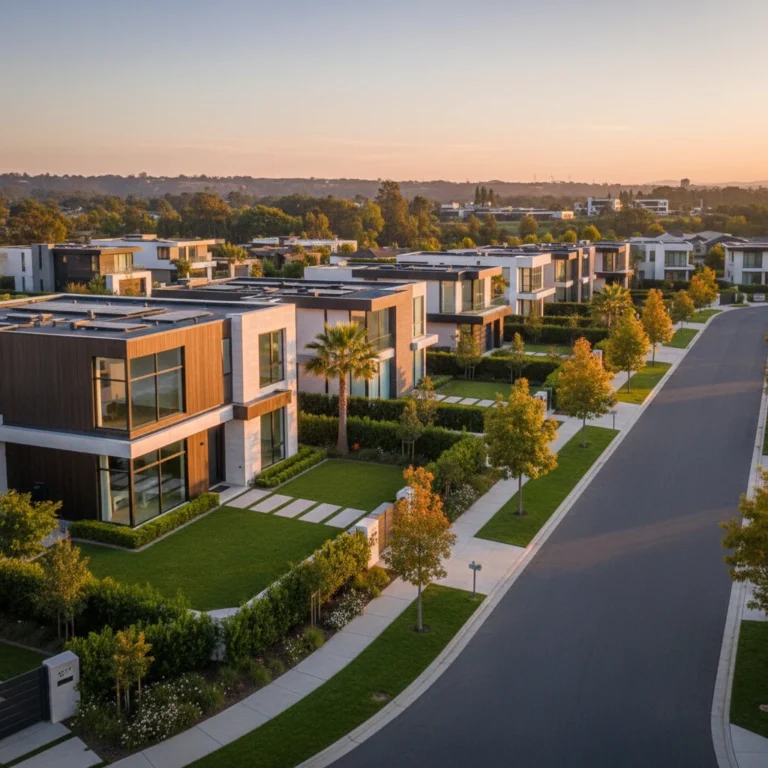


A premium address can command attention. It does not automatically deliver capital growth. For an investor allocating substantial capital in Istanbul or Dubai, the distinction matters: a well-finished residence may hold lifestyle appeal while an intelligently selected asset benefits from the forces that move values over time.
Knowing how to assess property appreciation means looking beyond launch brochures, headline rental yields, and broad claims about a city’s growth. It requires a disciplined view of scarcity, demand, pricing, execution, and the quality of the eventual exit market. The objective is not to predict a precise future price. It is to identify assets with a credible path to outperforming their local market.
Start With the Right Appreciation Question
Property appreciation is the increase in an asset’s market value over a holding period. The calculation is straightforward:
Appreciation rate = (future market value – purchase price) / purchase price
The analysis behind those figures is not. A property can rise in nominal value simply because of inflation or currency movement, while producing limited real wealth growth. Cross-border investors should distinguish between nominal appreciation, appreciation measured in their home currency, and real appreciation after inflation, taxes, financing costs, service charges, and transaction expenses.
The more useful question is not, “Will this property become more expensive?” In a strong market, many properties may do so. Ask instead: “Why should a qualified buyer pay more for this specific asset in five or seven years?” A persuasive answer usually rests on several independent factors, not a single market forecast.
How to Assess Property Appreciation by Location
Location remains the first filter, but premium investors should assess it with more precision than a neighborhood name. A desirable district can contain both exceptional micro-locations and oversupplied streets with little pricing power.
Start with connectivity. In Dubai, proximity to established business districts, waterfronts, high-quality retail, airports, and major transport corridors can support enduring demand. In Istanbul, access to commercial centers, premium educational and healthcare institutions, the Bosphorus, and evolving transport infrastructure can materially shape a property’s buyer pool. The relevant issue is whether the location reduces friction in daily life for the people most likely to own or lease the asset.
Then consider the quality of the immediate setting. Views, privacy, frontage, walkability, mature landscaping, and distance from future construction are not cosmetic details. They influence resale desirability. A residence overlooking a protected waterfront or park has a different scarcity profile from one whose view depends on undeveloped adjacent land.
Finally, evaluate the area’s stage of maturity. Established districts generally offer clearer comparable sales and lower execution risk. Emerging districts may offer greater upside, but only when infrastructure, employment, and lifestyle demand are advancing faster than new supply. The right choice depends on your risk tolerance and holding horizon. A wealth-preservation buyer may favor proven depth of demand; an investor with a longer horizon may accept measured development risk for stronger appreciation potential.
Measure Supply Against Real Demand
Supply is one of the most overlooked variables in luxury real estate. New towers, branded residences, and master-planned communities can create excitement, but they also compete for the same future tenants and buyers.
Assess the current inventory, the development pipeline, and the type of product being delivered. A market may have a large number of units under construction while still lacking true substitutes for a particular property – a low-density waterfront residence, a family-sized home in a central district, or a commercial asset with institutional-grade specifications.
Demand should be analyzed just as carefully. Look at who is buying and why. Is demand driven by end users, international wealth, corporate relocations, tourism, residency incentives, or short-term speculation? End-user demand usually creates a more resilient foundation for values because buyers are less likely to exit quickly when market sentiment changes.
In both Istanbul and Dubai, policy, migration patterns, business formation, and international connectivity can influence demand. These forces are meaningful, but they should support the investment case rather than replace property-level analysis. A compelling city narrative cannot compensate for a weak building, poor unit layout, or excessive entry price.
Establish Whether the Purchase Price Is Disciplined
Future appreciation begins with the price paid today. Even an exceptional property can underperform if acquired at an unjustifiable premium.
Compare the asset with genuinely relevant transactions, not merely asking prices. The most useful comparables share the same micro-location, building quality, view, floor level, size, condition, and ownership structure. In a new development, compare the launch price with completed resale stock nearby and with future competing projects. If the developer’s premium is significant, identify what makes it defensible: brand strength, rare design, superior amenities, a stronger plot, or a proven delivery record.
Price per square foot is a useful starting point, not a verdict. A larger apartment may show a lower rate but appeal to a narrower resale market. A smaller, impeccably designed residence in a coveted building may command a higher rate while remaining more liquid. The central issue is whether the next buyer will recognize and pay for the distinction you are buying today.
Currency deserves equal attention. A US-based investor purchasing in Turkish lira, for example, must assess both local property appreciation and exchange-rate exposure. A lower purchase price can look attractive, but currency depreciation may alter dollar-denominated returns. Conversely, dollar-pegged markets can offer a different form of predictability. Neither structure is inherently superior. The investment must align with the investor’s liabilities, time horizon, and desired currency exposure.
Evaluate the Developer and the Asset’s Enduring Quality
In off-plan and recently completed projects, the developer is part of the investment. A respected developer can protect value through delivery quality, design coherence, operational standards, and buyer confidence at resale. A weak developer can undermine a strong location through delays, specification changes, poor management, or an undisciplined sales strategy.
Review the developer’s completed portfolio, not only its renderings. Consider whether past projects maintained their appeal after handover, whether common areas have been well managed, and whether resale values have held relative to competing buildings. For commercial property, assess lease design, building systems, tenant profile, and adaptability to changing business needs.
The physical asset should also be judged for longevity. Timeless architecture, efficient layouts, natural light, intelligent storage, appropriate ceiling heights, and durable materials have lasting relevance. Highly theatrical design may attract attention at launch but can age quickly. In premium markets, design quality is not simply aesthetic. It is a component of future liquidity.
Build an Exit Case Before You Enter
A disciplined investor considers the exit market at acquisition. Identify the likely buyer in the future: a local family, an international executive, a second-home purchaser, an investor seeking rental income, or a corporate occupier. Then ask whether that buyer pool is broad enough to support liquidity when you choose to sell.
Liquidity is especially important for high-value properties. An ultra-specialized residence may be rare, but rarity alone does not ensure demand. The strongest premium assets balance distinction with usability. They offer a feature that cannot easily be replicated while remaining suited to the expectations of a defined, financially capable buyer group.
Stress-test the case as well. What happens if rental growth slows, financing conditions tighten, a competing project launches, or your holding period shortens? A property with a durable investment thesis should remain defensible under less favorable assumptions. This does not eliminate risk. It prevents a decision from depending on a perfect market outcome.
Use Appreciation as One Part of Total Return
Capital growth matters, but it should be assessed alongside net rental income, operating expenses, taxes, service charges, furnishing costs, and transaction costs. A property with moderate appreciation and reliable income may produce a stronger total return than an asset whose growth story depends entirely on a future resale premium.
For investors pursuing Turkish citizenship by investment, qualification requirements should be treated separately from investment quality. A qualifying purchase is not automatically an exceptional asset. The most considered strategy is to meet the program’s requirements while preserving location quality, resale depth, and pricing discipline.
RAD Global approaches this work as an investment decision rather than a property search. The value lies in testing each opportunity against local evidence, cross-border considerations, and the investor’s own definition of success.
The right asset is rarely the one with the loudest promise of appreciation. It is the one whose value can be clearly explained before purchase – and still clearly defended when it is time to sell.